

FREE CAT ARTICLES
This is where our journey begins. Join us as we grow and succeed together. We're glad you're here to be a part of our story.
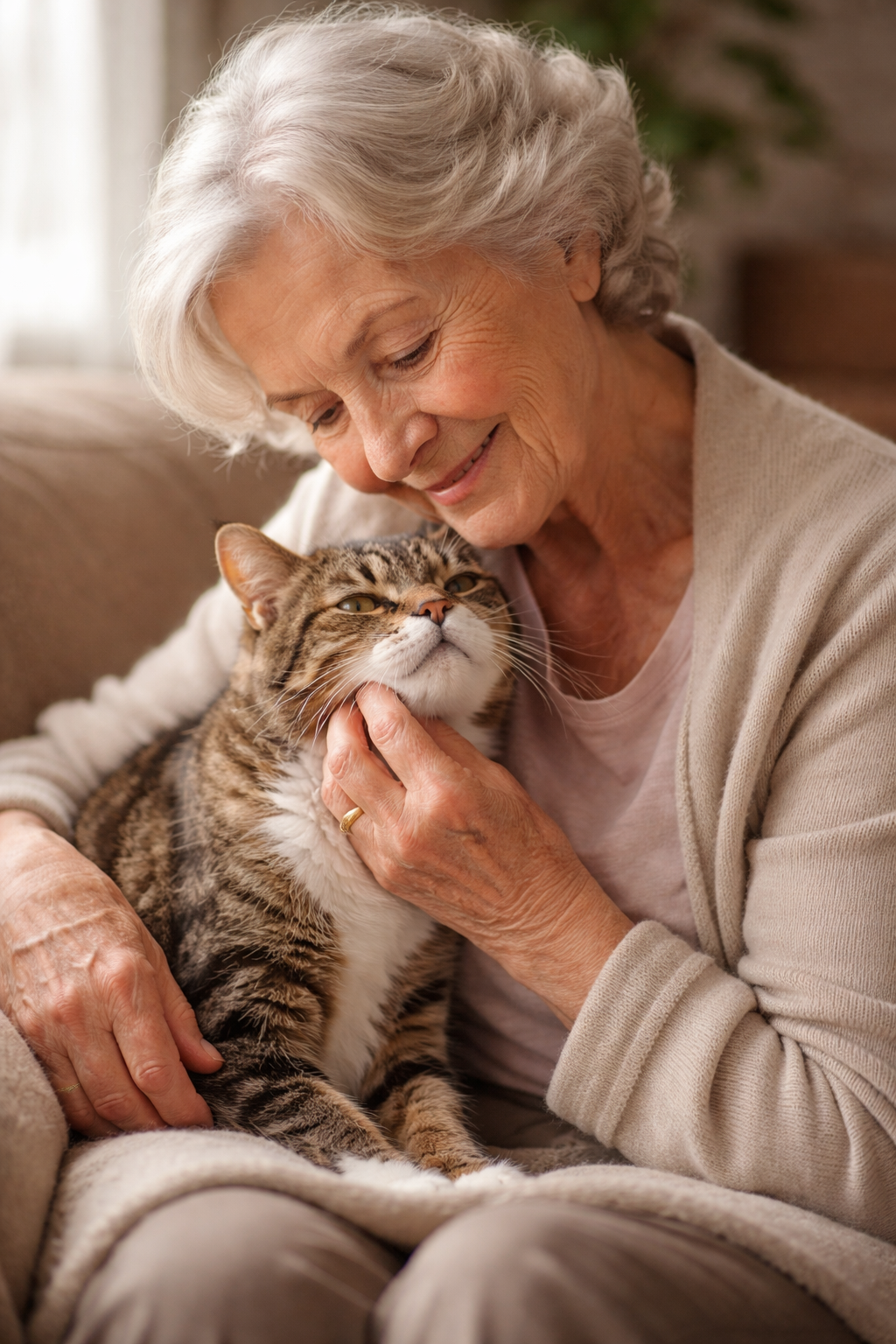
3 Tips for Elderly Cats
1. Make Your Home Easier for Them to Navigate
Older cats often experience arthritis or reduced mobility. Jumping onto high furniture or climbing stairs can become difficult and sometimes painful.
You can help by making small changes around your home:
-
Place soft beds in easily accessible spots.
-
Use pet stairs or ramps so they can reach favorite sleeping places.
-
Keep food, water, and litter boxes on the same floor of the home.
These small adjustments can greatly reduce stress on your cat’s joints and make everyday life much more comfortable.
2. Schedule Regular Veterinary Checkups
Senior cats should see a veterinarian more often than younger cats. Many vets recommend checkups every six months once a cat reaches about 10 years old.
Regular visits help detect health problems early, such as:
-
Kidney disease in cats
-
Hyperthyroidism in cats
-
Arthritis in cats
Catching these conditions early can make treatment easier and significantly improve your cat’s quality of life.
3. Keep Them Mentally and Physically Stimulated
Even though older cats may sleep more, they still need gentle playtime and mental stimulation. Regular activity helps maintain muscle tone and prevents boredom.
Try introducing slower-paced interactive toys such as the Potaroma Flopping Fish Cat Toy, which moves in a way that encourages natural hunting instincts without requiring intense physical effort.
Short daily play sessions of 5–10 minutes can help keep your senior cat active and engaged.
Final Thoughts
Growing old is a natural part of life for cats, but with a little extra care and attention, senior cats can continue to live happy, comfortable lives. By making your home easier to navigate, staying consistent with veterinary care, and providing gentle playtime, you can help your elderly cat enjoy their golden years to the fullest.
After all, the love and companionship they’ve given over the years deserve nothing less. 🐾
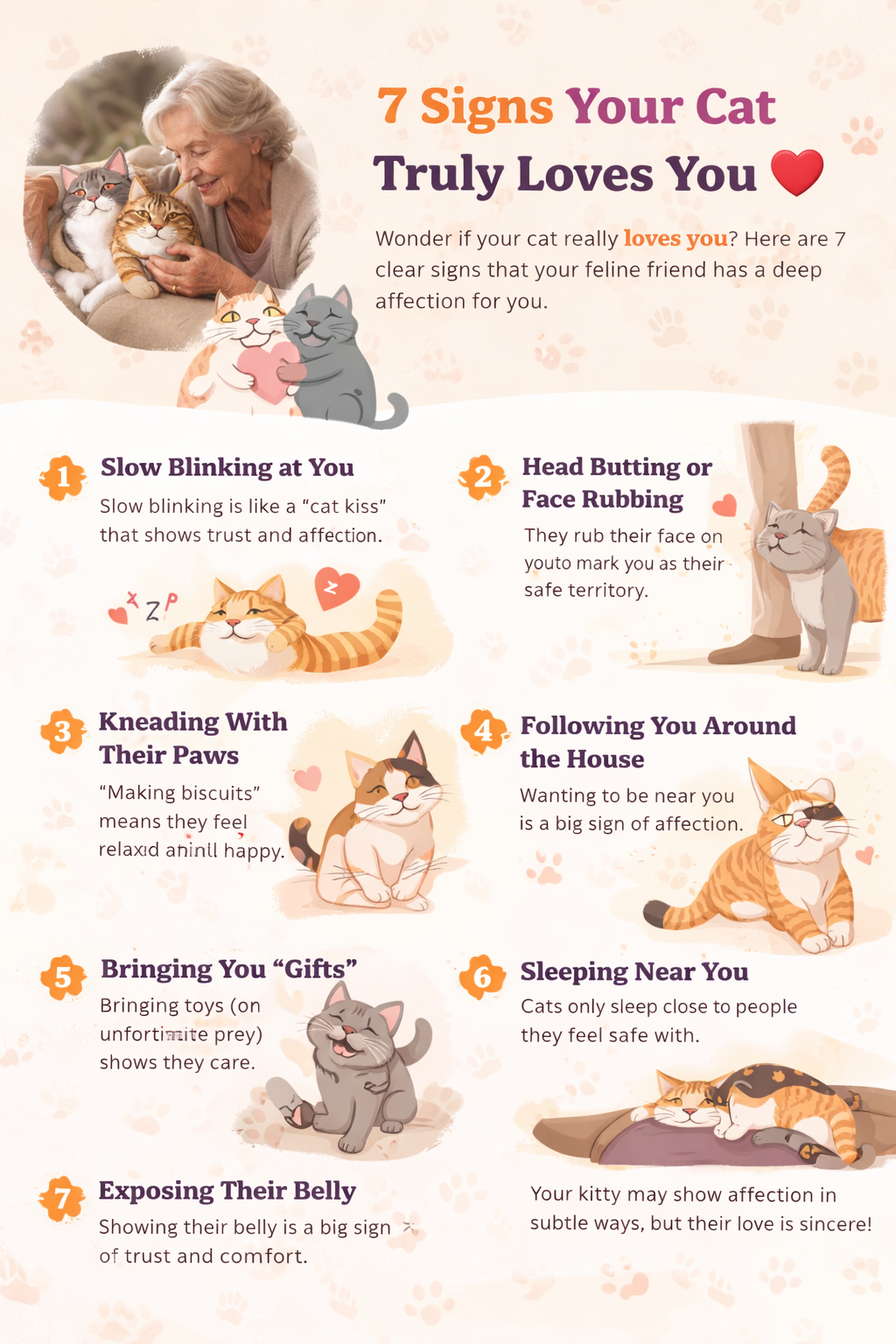
7 Signs Your Cat Truly Loves You 🐱❤️
Many cat owners wonder if their cat actually loves them or simply tolerates them for food and treats. While cats may seem mysterious compared to dogs, they actually show affection in many subtle ways. If you know what to look for, you’ll realize your cat may be expressing love all the time.
Here are seven common signs your cat truly cares about you.
1. Slow Blinking at You
Cats use slow blinking as a sign of trust and affection. When your cat slowly closes their eyes while looking at you, it’s often called a “cat kiss.” Try slowly blinking back—many cats will repeat the gesture.
2. Head Butting or Face Rubbing
When a cat bumps their head against you, they’re marking you with scent glands located around their face. This behavior means they see you as part of their safe territory.
3. Kneading With Their Paws
Kneading, sometimes called “making biscuits,” comes from kittenhood when cats knead their mother to stimulate milk flow. Adult cats often knead when they feel relaxed and safe.
4. Following You Around the House
If your cat likes to follow you from room to room, it usually means they enjoy your company. Cats are naturally independent, so choosing to stay near you is a big compliment.
5. Bringing You “Gifts”
Sometimes cats bring their owners toys—or even unfortunate prey. While it might not be pleasant, this behavior is often a sign that your cat wants to share something valuable with you.
6. Sleeping Near You
Cats only sleep deeply in places where they feel completely safe. If your cat sleeps on your lap, next to you, or on your bed, it’s a strong sign they trust you.
7. Exposing Their Belly
A cat showing their belly means they feel comfortable and secure. However, it doesn’t always mean they want belly rubs—many cats still prefer gentle pets on the head or chin.
Final Thoughts
Cats show affection differently than people or dogs, but their love is real and meaningful. By paying attention to these small behaviors, you’ll begin to see just how much your feline friend appreciates you.
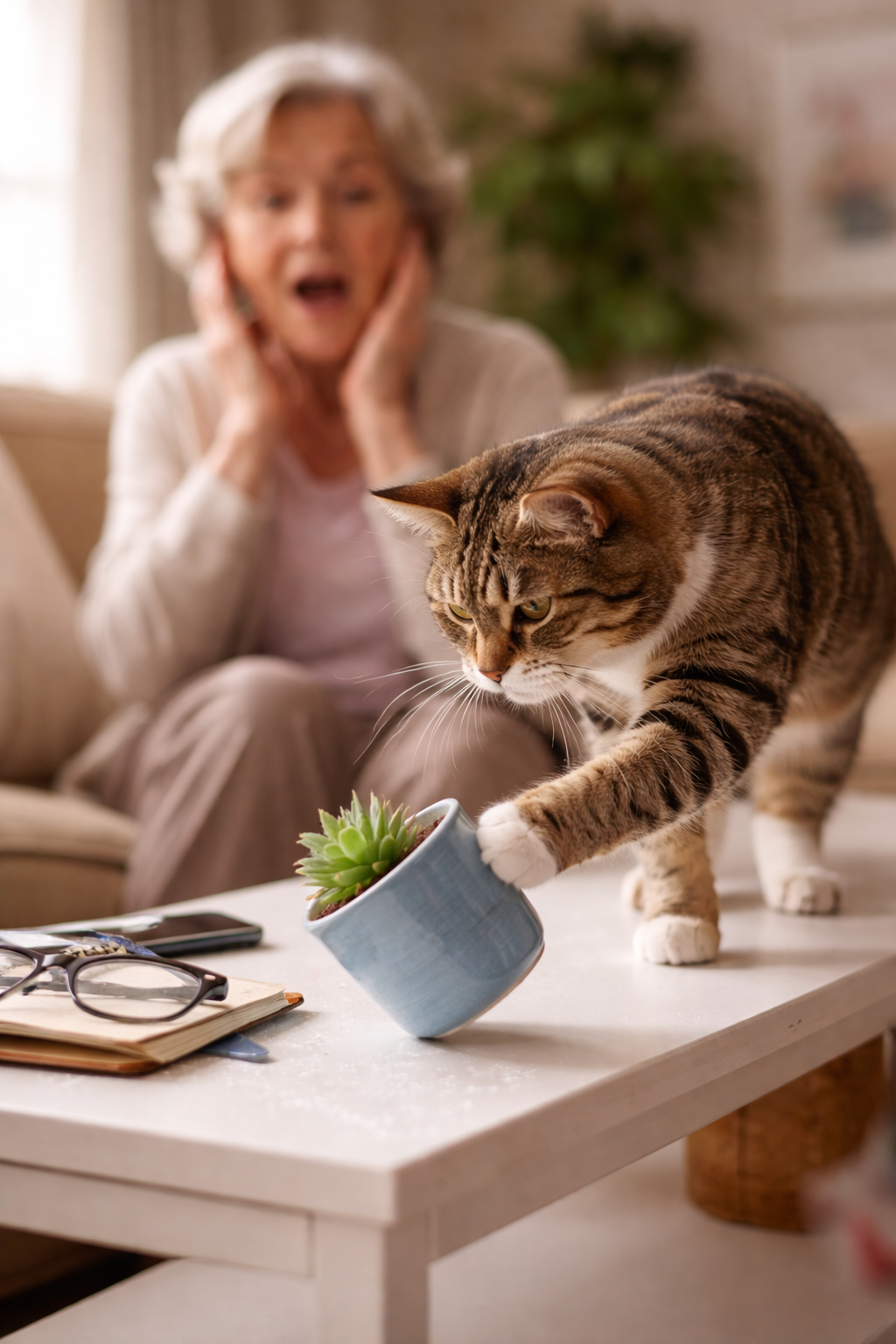
Why Do Cats Knock Things Off Tables? 🐱
If you’ve ever owned a cat, you’ve probably witnessed the moment: your cat slowly extends a paw, looks you directly in the eyes, and pushes your favorite item right off the table.
It might look like your cat is being mischievous or even spiteful, but there are actually several natural reasons why cats love knocking things off surfaces.
Let’s explore why cats do this strange—but very common—behavior.
1. Cats Are Natural Hunters
Cats are born predators. In the wild, they use their paws to test objects that might be prey. When a cat bats at something on a table, they are often simply testing it the same way they would test a mouse or insect.
The movement of the object falling can trigger their hunting instincts and make the activity more interesting.
2. They’re Curious Creatures
Cats are extremely curious animals. If something new appears on a table, desk, or shelf, your cat will likely investigate it.
One way cats explore objects is by touching them with their paws. Sometimes this results in the object falling to the ground.
To your cat, they’re just experimenting with their environment.
3. Your Cat Wants Attention
Cats quickly learn what gets their owner’s attention.
If your cat knocks something off the table and you react—by speaking, laughing, or rushing over—they may repeat the behavior because it works.
Even negative attention can still be rewarding for a cat who wants interaction.
4. Boredom or Lack of Stimulation
Indoor cats especially need regular mental stimulation. If they don’t have enough toys or activities, they may create their own entertainment.
Knocking objects off tables can become a game that relieves boredom.
This is especially common when cats are left alone for long periods.
5. They Like Watching Things Move
Cats are fascinated by movement. When an object falls, it creates motion and sound, which can trigger their curiosity.
For some cats, watching things fall is simply fun.
How to Stop Cats From Knocking Things Over
If your cat’s behavior is becoming destructive, there are a few simple strategies you can try:
Provide more toys and enrichment
Interactive toys, puzzle feeders, and climbing structures can keep cats mentally stimulated.
Play with your cat regularly
Daily play sessions help satisfy your cat’s hunting instincts.
Remove fragile objects
If something is important or breakable, keep it out of reach.
Ignore attention-seeking behavior
If your cat is doing it for attention, reacting may reinforce the behavior.
Final Thoughts
Cats knocking things off tables may seem frustrating, but it’s usually a normal behavior rooted in curiosity, hunting instincts, or boredom.
Understanding why your cat does this can help you manage the behavior and create a happier environment for both you and your feline friend.
And if your cat still pushes things off the table occasionally… well, that might just be part of their mysterious charm.
Create Your Own Website With Webador